As all the media students or photographers out there will know DLSR stands for Digital Single-Lense Reflex and there is no need to tell you that these cameras are completely different to the Sony cameras we used last year. We are using DSLR cameras this year as it helps give the cinematic look that all audiences what's to see from a film. The specific DSLR camera we will be using is the Canon 600D.

However, there are more elements to these types of cameras that we will need to learn and understand in order to make a blockbuster short such as;
- Aperture
- Shutter Speed
- ISO
- Selective Focus

This image shows the importance of each element and how each element serves a different purpose. however, all effect each other.
Camera exposure;
A photographs or videos exposure determines how light or dark an image will appear when it's been captured by the camera. Believe it or not, this is determined by just three camera settings ( these I have stated above.) Let's go through these settings in detail;
Shutter Spead;
A camera's shutter determines when the camera sensor will be open or closed to incoming light from the camera lens. The shutter speed refers to how long this light is permitted to enter the camera. shutter speed and exposure time refer to more or less the same thing where a faster shutter speed means a shorter exposure time.
Shutter speed is possible the simplest of the three camera settings. It has exactly a 1;1 relationship with the amount of light entering the camera for example when the exposure time doubles the amount of light entering the camera also doubles.
Shutter speed is a powerful tool for freezing or enlarging the appearance of movement.
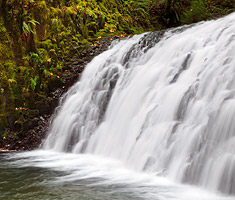
above is an example of a slow shutter speed.

above is an example of a fast shutter speed.
The Aperture settings.
A camera's aperture setting controls the area over which light can pass through the camera lens. Aperture is measured in f/stops. aperture can affect how much of the background can be seen. The iris of the lens controls the size of the aperture and is also called the diaphragm. The purpose of the diaphragm is to block or stop the amount of light that goes through aperture, Aperture is expressed in f-numbers ( for example f/5.6) these f numbers are also known as f stops and are a way of describing the size of the aperture, or in easier terms how open or closed the aperture is.A smaller f-stop means a larger aperture (meaning a blurry background) and a larger f-stop means a smaller aperture giving a sharper background.
Here is an image showing how aperture works.


ISO
The ISO speed determines how sensitive the camera is to incoming light. ISO is similar to shutter speed as it also has a 1:1 relationship with how much exposure increases and decreases. However, unlike aperture and shutter speed, a lower ISO speed means the less sensitive it is to light and a higher ISO speed means an increase in the sensitivity of light. If the ISO speed is higher it dramatically increases the image noise due to more light hitting the sensor. As a result of this, ISO speed is usually only increased from it's minimum value if the desired aperture and shutter speed aren't otherwise obtained.
Here is an example of a high and low noise image,

To help up with using the camera we watched some tutorials to understand how to use the camera where each element,t are on the camera, how to change the settings and also how to focus the camera effectively.
The first tutorial showed us how the camera worked and how to focus.
The second tutorial showed us how to set the exposure of the camera.
Know we knew how to use the camera we could know experiment with the camera ourselves by taking a few pictures. however, the task was to make sure the background was blurred and the foreground was in focus.
Below are the pictures we took,


Considering this was the first time in using the cameras I think overall the shooting went really well there were a few mistakes learned along the way and was really good to put what we had learned in to practice.
Next post, Our documentries.
